Why Is My Leach Field Not Draining Properly?
· Royal Flush Septic
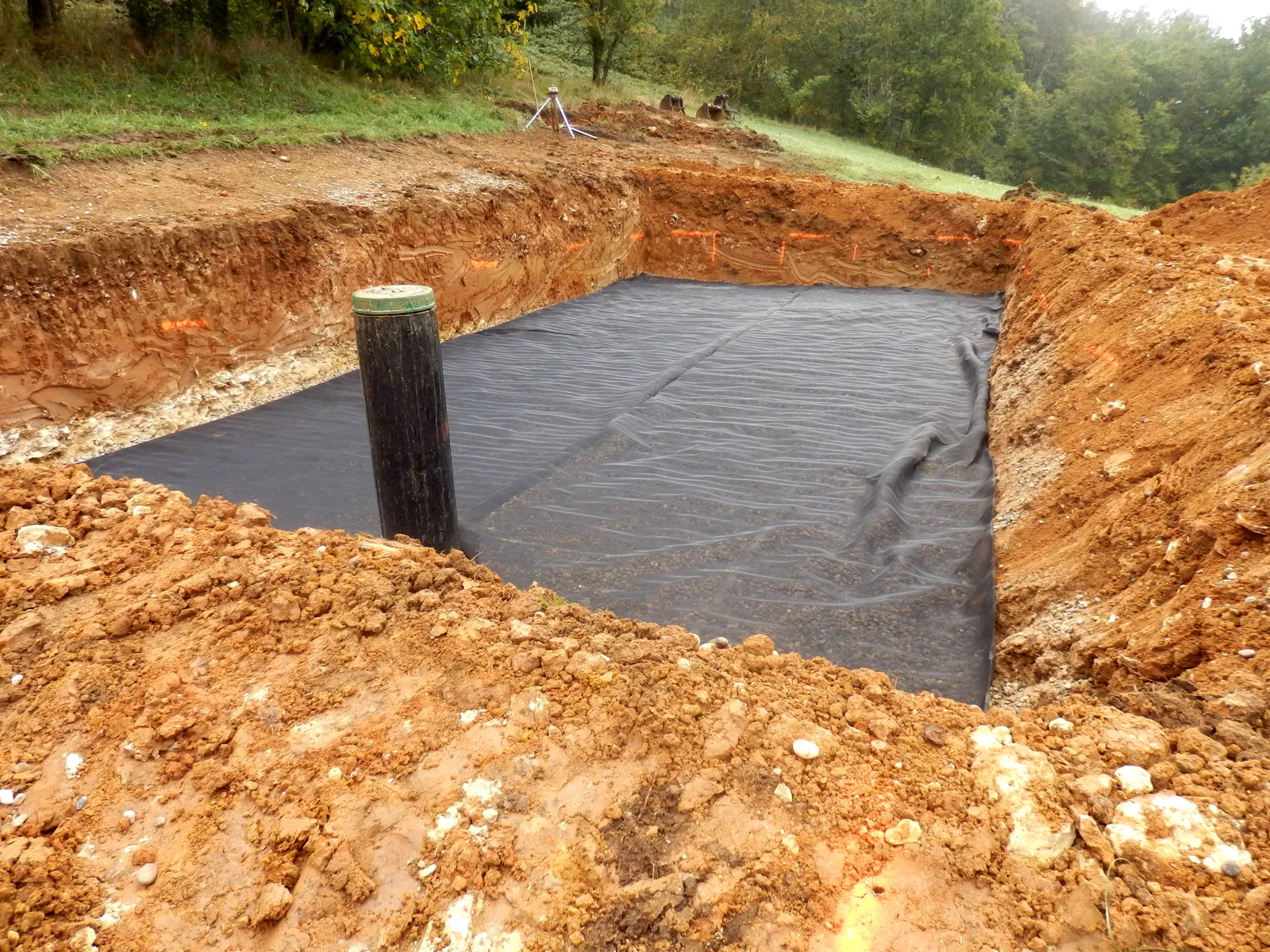
The leach field is the part of your septic system nobody thinks about until the yard gets soggy. The tank gets pumped, the drains get snaked, but the field just sits out there quietly doing the hardest job in the system: taking every gallon of wastewater your household produces and filtering it back into the ground.
When it stops draining, the symptoms show up everywhere else first: slow drains, gurgling, odors, wet spots. The good news is that a struggling leach field isn’t always a dead one. Several of the most common causes are fixable without digging up the yard, and figuring out which one you have is the difference between a service call and a replacement field.
How a leach field is supposed to work
Wastewater leaves your septic tank as liquid effluent, having dropped its solids as sludge in the tank. That liquid flows into a network of perforated pipes buried in gravel trenches, seeps out into the surrounding soil, and gets filtered and broken down by soil bacteria on its way down to the water table.
The whole arrangement depends on two things: the tank keeping solids out of the field, and the soil staying porous enough to accept water. Almost every leach field problem traces back to one of those two failing.
The usual suspects, from cheapest to worst
The tank hasn’t been pumped, and solids reached the field. This is the most common cause of premature field failure, and it’s entirely preventable. When the sludge layer in the tank gets too deep, solids ride out with the effluent and clog the pipe perforations and the gravel around them. Caught early, a septic pumping stops the damage and gives a marginal field a chance to recover. Caught late, the field is plugged for good. If you can’t remember your last pump-out, start here.
A clogged or damaged line between tank and field. Sometimes the field is fine and the problem is upstream: a blocked outlet baffle, a crushed pipe, or roots in the distribution line. These produce identical symptoms to a failed field but cost a fraction to fix. A sewer camera inspection settles the question before anyone starts digging, and a water jetting can clear a clogged line without excavation.
Hydraulic overload. A field is sized for a certain daily flow. Add a new family member, a leaking toilet flapper running all night, or back-to-back laundry days, and you can drown a healthy field. The tell: symptoms come and go with water use, worst after heavy-use days, better after the house sits empty. Fixing the leak or spacing out the laundry sometimes solves the “failure” outright.
Biomat buildup. Every field develops a black, tar-like bacterial layer where effluent meets soil. That’s normal and even useful in moderation, but over years it thickens until water can’t get through. A field that has gotten gradually slower over a decade, rather than suddenly, is usually a biomat story. Depending on severity, options range from resting the field to replacing it.
Compacted or saturated soil. Driving over the field, parking a trailer on it, or building a shed above it compacts the soil and crushes pipes. Water is heavier than people think, and so are snowmachines. Keep vehicles off the field year-round.
Age. A well-built, well-maintained leach field lasts 20 to 30 years. If yours went in when the house was built in the early ’90s, it may simply be done. At that point the conversation is about septic system installation, not repair.
The Alaska complications
Drain fields in the Mat-Su Valley deal with conditions the national septic guides don’t cover.
Spring breakup is the great impersonator. Every May, we get calls about “failed” leach fields that are actually just underwater. During breakup, the water table rises and the soil around the field saturates, so effluent has nowhere to go and the system backs up. A field that struggles only during breakup isn’t necessarily failing, but it has no margin left, and it’s telling you the tank needs pumping or the field needs help before next spring. Pumping the tank buys breathing room while the ground dries out.
Frozen fields and frozen lines. A field under insufficient snow cover in a hard cold snap can freeze, especially if a slow leak kept the soil wet going into winter. So can the line feeding it. Winter symptoms that appeared suddenly during extreme cold point to ice, not biomat, and steam thawing fixes ice in hours. Don’t let anyone talk you into excavating a field in January before ruling out a frozen line.
Glacial soils are a mixed bag. Valley soils range from gravel that drains beautifully to silt and clay lenses that barely percolate at all, sometimes on the same property. A field built on marginal soil has less forgiveness for every problem on this list. If you’re buying property or replacing a field, the perc test matters more here than almost anywhere.
Snow cover hides the evidence. Soggy ground and the classic stripe of bright green grass over a failing field are invisible for half the year. In winter, trust the indoor symptoms: slow drains, gurgling, and odors carry the diagnostic weight.
Can a leach field recover, or is it done?
It depends on what’s wrong, which is why diagnosis comes before shovels. As a rough guide:
- Usually recoverable: hydraulic overload, a full tank caught before solids ruined the field, clogged distribution lines, frozen lines, breakup saturation.
- Sometimes recoverable: early biomat buildup, minor compaction, solids intrusion caught mid-way.
- Not recoverable: a field that stays saturated in dry weather, sewage surfacing repeatedly, crushed or collapsed laterals, a field past its design life.
A tank that backs up again within weeks of a pump-out, in dry conditions, is the classic sign the field itself is finished. If the system also has an aging steel tank, it often makes sense to handle both at once; most replacements in the Valley pair a new field with a concrete tank built for Alaska ground.
What to do right now
If the yard is wet or drains are backing up, cut water use hard: no laundry, short showers, minimal flushing. Every gallon you don’t send to the field is a gallon that isn’t surfacing in the yard. Then get a diagnosis before agreeing to excavation, because half the “failed fields” we look at turn out to be something cheaper.
Royal Flush handles the whole chain, from pumping and camera inspection to septic repair and full system replacement, with 24/7 emergency service across the Mat-Su Valley. Call (907) 376-8988 for a free quote.
Frequently Asked Questions
How do I know if the problem is the leach field or the septic tank? You usually can’t tell from inside the house, because both produce the same symptoms. The tell comes after a pump-out: if the tank refills and backs up again within days or weeks in dry conditions, the field isn’t accepting water. A camera inspection of the outlet and distribution lines pinpoints it without guesswork.
Can I fix a leach field myself? You can fix the things that overload it: repair leaking fixtures, spread out laundry, keep vehicles off the field, and get the tank pumped on schedule. The field itself is a different story. Excavation, line jetting, and field replacement involve permits, heavy equipment, and raw sewage, and DIY digging can turn a repairable field into a total loss.
How much does leach field repair or replacement cost? It ranges widely because “leach field problem” covers everything from a clogged line to a full replacement, and soil conditions drive the excavation work. That’s exactly why diagnosis comes first. Royal Flush gives free quotes, so you’ll know what you’re dealing with before committing to anything.
Do septic additives restore a failing leach field? No additive reliably reverses a plugged field, and some make things worse by suspending solids that then flow out to the field. The money is better spent on pumping and an inspection. Regular maintenance does more for field life than anything sold in a bottle; our septic care guide covers the habits that matter.
My leach field only has problems during spring breakup. Is it failing? Not necessarily. Rising groundwater during breakup can temporarily overwhelm even a healthy field. But a field with zero margin during breakup is a field near its limit, and it usually gets worse each year. Pump the tank going into spring, and have the system evaluated so a replacement, if one is coming, happens on your schedule instead of during a backup.
How long should a leach field last in Alaska? Twenty to thirty years is typical for a properly built field that gets regular tank pumping. Freeze-thaw cycles, marginal glacial soils, and skipped pump-outs all pull that number down; on good gravel with consistent maintenance, fields can outlast the high end.

A Royal Flush beats a full house!
Ready for fast, reliable septic service? Contact us today and get your free, no-obligation quote!
Licensed & insured professionals
Prompt, reliable service
Free, no-obligation quotes
