How to Tell If Your Septic Tank Is Full
· Royal Flush Septic
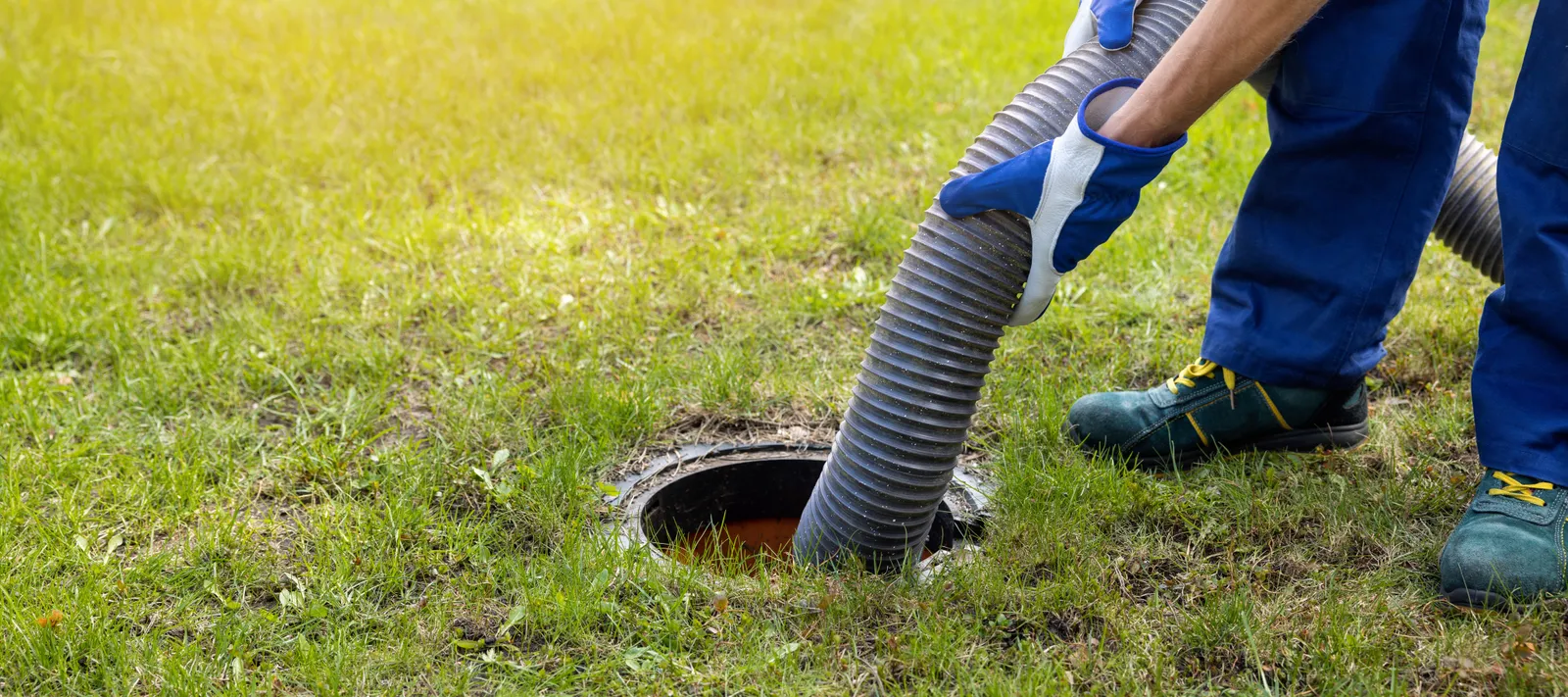
Most septic tanks don’t fail loudly. They give you weeks of small warnings first, and the homeowners who catch them early pay for a routine septic pumping instead of an emergency repair. The ones who miss them end up with sewage in the bathtub.
This guide covers the warning signs that apply anywhere, then the Alaska-specific symptoms that trip up homeowners in the Mat-Su Valley, where a frozen line and a full tank can look identical from inside the house.
First, what “full” actually means
A septic tank is always full of liquid. That’s how it works. Wastewater flows in, solids settle to the bottom as sludge, grease floats to the top as scum, and the liquid in the middle drains out to the leach field.
The problem isn’t liquid. The problem is sludge. Over the years, the sludge layer grows until it eats up the tank’s working volume and starts pushing solids out into the drain field. Once solids reach the drain field, you’re no longer talking about a pumping bill. You’re talking about excavation.
So when people ask whether their tank is full, the real question is whether the sludge layer has crossed the line. Here’s how to tell without opening the lid.
The warning signs, roughly in order
Slow drains throughout the house. One slow sink is usually a clog, and a drain cleaning will sort it out. But when every fixture slows down at once, including toilets and the lowest drains in the house, the bottleneck is downstream of your plumbing. That points to the tank or the line feeding it.
Gurgling pipes. Air bubbling back through drains or toilets after you run water means the system is struggling to push wastewater through. It’s one of the earliest signs and the easiest to ignore.
Odors near drains, the tank, or the drain field. A healthy system keeps sewer gas where it belongs. If you smell it in the yard or near floor drains, the tank may be at capacity and venting where it shouldn’t.
Standing water or unusually lush grass over the drain field. When the tank can’t hold solids back, the drain field starts choking. Effluent rises instead of percolating down. A bright green stripe of grass over the field in an otherwise normal yard is the classic tell.
Sewage backup. This is the end of the warning sequence, not the beginning. If wastewater is coming up through the lowest drain in your house, stop running water and call for service. At this stage you may need septic repair rather than just a pump-out, depending on what the backup did to the system.
The calendar. No symptoms at all, but you can’t remember the last pump-out? That’s a warning sign too. Sludge accumulates silently for years before any of the above shows up.
The Alaska complications
Generic septic advice is written for places where the ground doesn’t freeze six feet down. The Mat-Su Valley adds a few wrinkles.
A frozen line mimics a full tank. In the middle of winter, slow drains and backups often have nothing to do with the tank. The line between the house and the tank, or the tank’s inlet baffle, has frozen solid. The fix is completely different: steam thawing clears a frozen line in hours, while pumping a frozen system accomplishes nothing. If your symptoms appeared during a cold snap, suspect ice before sludge. A technician can tell the difference quickly; from inside the house, you usually can’t.
Spring breakup saturates drain fields. During breakup, the water table rises and soil that normally percolates fine becomes waterlogged. A tank that was managing in February can start backing up in May, not because the sludge got worse but because the drain field temporarily has nowhere to send liquid. Pumping the tank buys breathing room while the ground dries out.
Snow hides everything. Pooling effluent and the telltale green stripe are invisible under three feet of snow, which removes two of the most useful visual warnings for half the year. Interior symptoms (slow drains, gurgling, odors) carry more weight here than they do in the Lower 48.
Access matters before there’s a problem. If your tank’s standpipes are buried under snow or you genuinely don’t know where the tank sits on your property, sort that out before an emergency, not during one. A septic tank locating visit takes the guesswork out, and it’s a lot more pleasant in September than in a January backup at 20 below.
Full or failing? They look the same at first
Every symptom above can also indicate a failing system: a collapsed baffle, root intrusion, a cracked tank, or a drain field at the end of its life. Pumping fixes a full tank. It does not fix a broken one, and a tank that “fills up” again within weeks of a pump-out is telling you something is wrong downstream.
When the diagnosis isn’t obvious, a sewer camera inspection settles it. The camera shows exactly what’s happening in the line and at the baffles, so you’re paying to fix the actual problem instead of guessing. Older steel tanks in the Valley are a particular concern; many have rusted past the point of patching, and the long-term answer is replacement with a concrete tank built for Alaska ground.
How often should you pump in Alaska?
The standard national guidance is every three to five years, depending on tank size and household size. In Alaska, the case for the shorter end of that range is stronger. Cold ground slows the bacterial activity that breaks solids down, so sludge builds faster relative to use, and the freeze-thaw cycle is hard on every component of the system. Regular pumping also gets a professional’s eyes on your baffles and tank condition once a year, which is how small problems get caught while they’re still small. Our septic maintenance guide covers the habits that stretch the time between problems.
A rough rule of thumb between pump-outs: more people, more laundry, and a garbage disposal all push you toward more frequent service. A two-person household on a 1,250 gallon tank can go longer than a family of six on a 1,000 gallon tank, every time.
What to do right now
If you’re seeing one early symptom, schedule a pumping and mention what you noticed so the technician can check the baffles and sludge level while the tank is open. If you’re seeing several symptoms, or anything is backing up, stop adding water to the system (no laundry, short showers, minimal flushing) and call. Royal Flush runs 24/7 emergency service across the Mat-Su Valley at (907) 376-8988, and a free quote costs you nothing but the phone call.
Frequently Asked Questions
How long can a septic tank go without pumping? It depends on tank size, household size, and what goes down the drains. Three to five years is the common range, but a small tank serving a large household can need service in two. Waiting for symptoms is the expensive strategy, because by the time symptoms appear, solids may already be reaching the drain field.
Will a full septic tank fix itself if we use less water? No. Reducing water use slows the symptoms but does nothing about the sludge, which only leaves the tank through a pump truck. Cutting water is a useful stopgap between noticing the problem and the truck arriving, nothing more.
My drains slowed down during a cold snap. Full tank or frozen line? In the Mat-Su Valley in winter, a frozen line is at least as likely as a full tank, especially if the symptoms appeared suddenly during extreme cold. The two problems have completely different fixes, so get a diagnosis before paying for either. Royal Flush handles both steam thawing and pumping, so one call covers it.
Can I check the sludge level myself? You can, with a sludge gauge or a homemade probe through the access port, but be careful: septic gases are genuinely dangerous, tanks should never be entered, and lids should be secured immediately after. Most homeowners are better served having the level checked during a routine pump-out.
Does heavy rain or spring breakup make a septic tank fill faster? The tank itself fills at the rate you send water to it, but a saturated drain field can’t accept liquid, which backs the whole system up and produces the same symptoms as a full tank. This is common during breakup. Pumping relieves the pressure while the ground drains.

A Royal Flush beats a full house!
Ready for fast, reliable septic service? Contact us today and get your free, no-obligation quote!
Licensed & insured professionals
Prompt, reliable service
Free, no-obligation quotes
